What is a truck-hour, and why it beats a raw truck count for fleet benchmarking
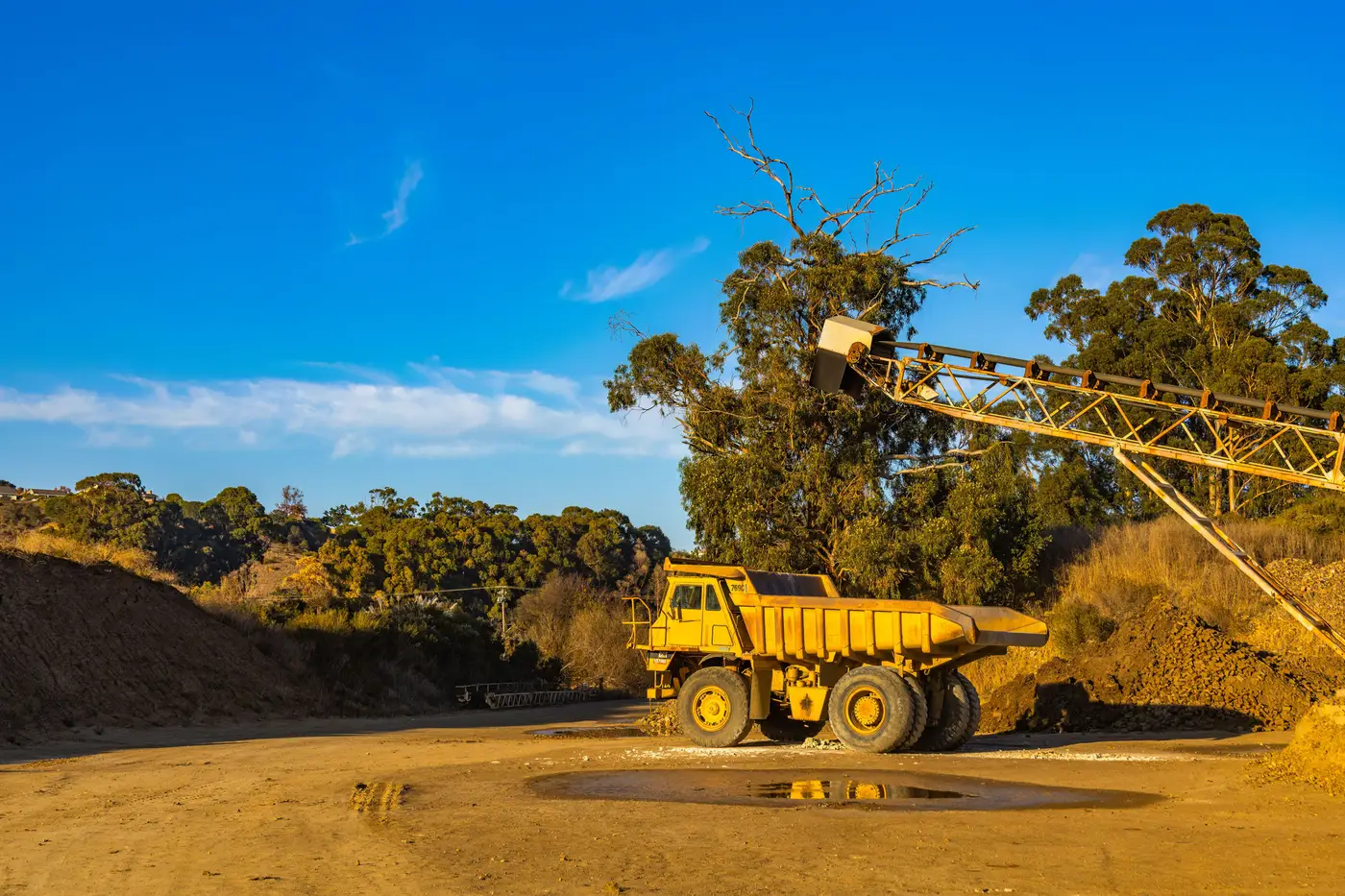
Count the trucks on a haul road at 10am and you get a number. Count them again at 2pm and you get a different number. Neither tells you much on its own, because a truck sitting idle at a dump point counts the same as one mid-cycle between the shovel and the crusher. That's the problem with a raw truck count as a benchmarking metric: it treats presence as activity.
A truck-hour fixes that by multiplying trucks on the network by the time they're actually hauling. Ten trucks running a full 10-hour shift is 100 truck-hours. Ten trucks running six hours because of a weather delay or a crusher tie-up is 60 truck-hours, even though the count at any given snapshot still reads "ten trucks." The count is the same. The work done is not.
Why a truck count alone misreads activity
Operators who benchmark on count alone end up comparing apples to idle trucks. Two pits can show the same fleet size on a given day and have wildly different output, because one is running clean cycles on a maintained haul road and the other is queuing at a single dump point or crawling over a washboarded ramp. A count tells you who showed up. It doesn't tell you who worked.
This matters even more for anyone estimating a competitor's activity from outside the fence, without access to their dispatch system or telematics feed. A single pass of imagery gives you a count. It takes a sequence of counts over time, tied to how long the fleet stays active and what state the haul roads are in, to get anything resembling a utilisation read. One snapshot is a headline number. A string of them, read against road condition, starts to look like a production signal.
Turning a count into a truck-hour
Building a truck-hour estimate without telematics means working from what's observable: how many trucks are on the network, how that count moves across the day, and whether the haul road itself is in a state that supports fast cycles or is forcing slower ones. A rutted or wet haul road doesn't show up in a dispatch log, but it shows up in cycle time, and cycle time is half of what a truck-hour is built from.
That's a different exercise than reading a telematics feed, where truck-hours come straight out of the GPS trace and engine-on data. From outside the fence, or from inside a mine that just wants a cross-check on its own fleet without pulling data off every haul truck, the inputs are a daily count and a daily read on road condition. Put those together over a run of days and you get something closer to a utilisation trend than a single count ever will.
What this looks like from outside the fence
Daily, ≤0.5 m imagery is enough to pick out individual haul trucks on a defined network and track how many are moving through it from one day to the next. It won't hand you engine hours or payload data, nobody's claiming that, but a daily count paired with a road-condition read gets you a repeatable proxy for fleet activity that doesn't require a site visit or a login to someone else's dispatch system.
For a mine benchmarking its own fleet against a plan, that's a sanity check that doesn't depend on every truck reporting in. For an analyst sizing up a competitor's output, it's the only read available, since nobody outside the fence gets telematics access. Either way, the metric worth tracking is truck-hours, built from count and road condition over time, not a single tally of trucks parked on an aerial frame.
Mine Fleet Activity runs this as a daily count and road-condition read on a defined haul network, built for exactly this kind of benchmarking.
Get in touch to pilot it on your haul network.