Haul road detour or permanent reroute? Reading the difference from above
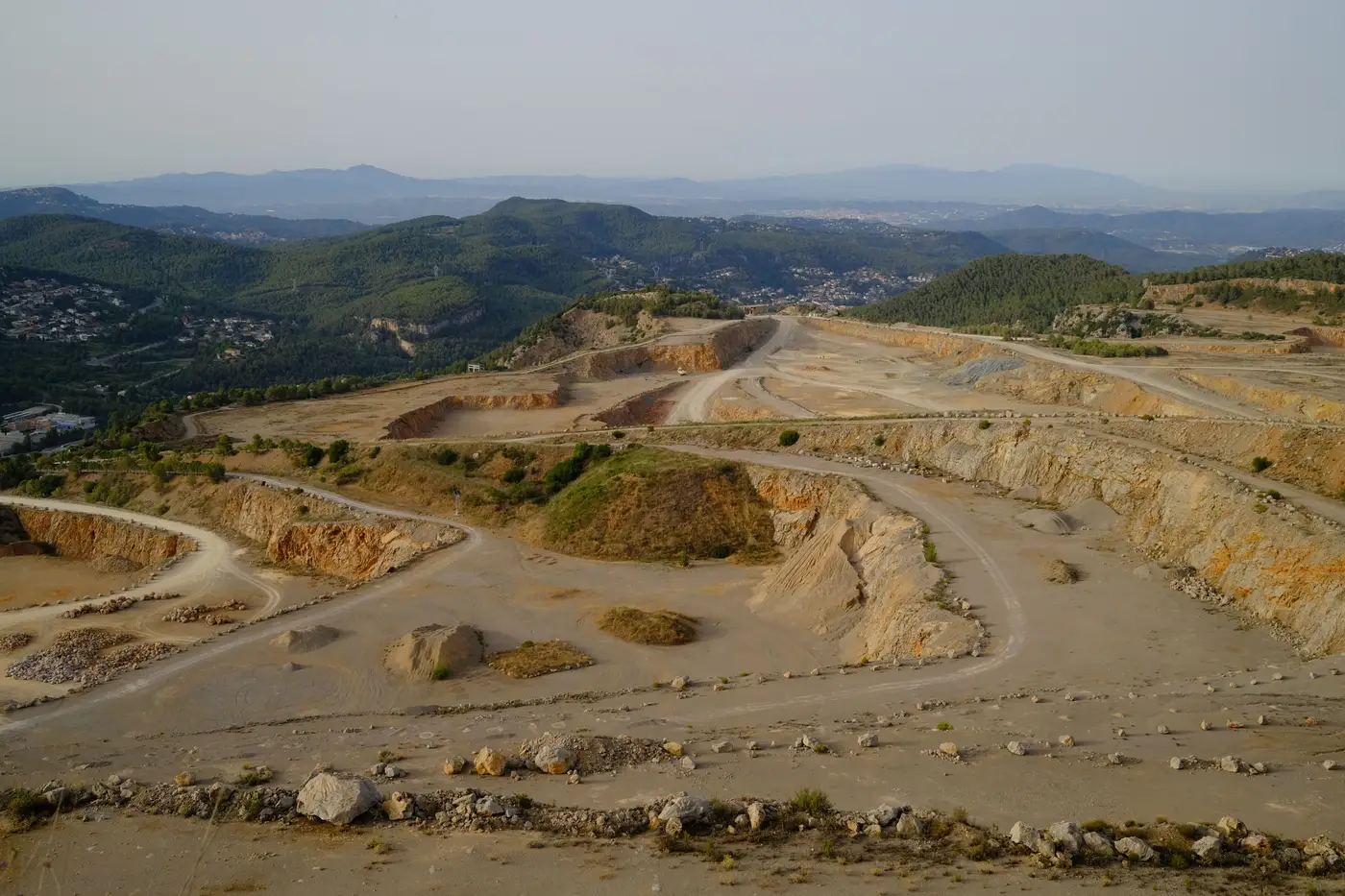
You're looking at two consecutive VHR passes of the same pit and the haul network has changed. A new leg has appeared off the main ramp, or an old switchback looks washed out and a short new stretch of road has been cut around it. Before you adjust your cycle-time model or your competitor activity estimate, you need to answer one question: is this a detour, or has the haul network actually been rebuilt.
The two look similar in a single frame. They read very differently once you know what to check.
Signs you're looking at a temporary detour
Detours exist to get trucks around a short-lived obstruction: a blast exclusion zone, a wash-out after rain, a slope failure, a water line repair, a grader working the main route. A few things usually give them away.
The old alignment is still intact underneath. You'll see the original road bed, graded and compacted, sitting right next to or crossing the new path. Nobody's torn it up or let it erode on purpose, because the plan is to go back to it.
The new segment is built fast and it looks it. Tighter radii, steeper short pitches, less berming than the rest of the network. Crews cut what the ground allows rather than what the design calls for, because they're not planning to maintain it past a few weeks.
Across passes, it doesn't persist. Check the imagery a few weeks later and the detour is often gone, the main route reopened, the shortcut starting to fade from lack of grading.
Truck distribution tells you something too. If trucks are still using both the old and new legs in the same period, or shifting back and forth between passes, that's consistent with routing around something temporary rather than a network redesign.
Signs you're looking at a permanent reroute
A reroute happens because the pit geometry moved. A pushback advanced the bench the old road sat on, a dump reached capacity and a new lift opened on a different flank, or a ramp got re-engineered to handle a steeper phase of mining. The old segment no longer fits the current pit geometry, so the new road replaces it outright rather than routing around a temporary snag.
Look for proper tie-in geometry. Sweeping curves, consistent width matching the rest of the active network, switchbacks cut and benched the way the rest of the haul road is built. This is infrastructure meant to carry the fleet for the life of that push, so it gets built to the same standard as everything else.
The old alignment degrades and stays degraded. No more grading passes, rutting and erosion accumulate, and in later imagery it may be partially consumed by the advancing bench or buried under waste. It's not sitting there ready to reopen.
Cross-check against what else is moving in the pit. A reroute usually correlates with a pushback on the adjacent bench, a dump that's visibly growing in a new location, or a pit limit that's shifted since your last read. A detour tends to sit in isolation, tied to one localized problem spot with no corresponding change in the rest of the layout.
Check back three, four, five passes later and the new leg is still carrying the trucks, still getting graded and watered between reads, while the old route has gone quiet: no truck tracks on it, no grading, the surface starting to rut and wash where nobody's maintaining it.
Why the distinction matters for a benchmark
If you're estimating haul distances or cycle times from outside the fence, treating a two-week detour as a permanent change in route length will throw your numbers off for every subsequent read until you catch the error. Treating a genuine reroute as a temporary blip means you keep anchoring distance estimates to a segment that no longer exists. Either mistake compounds the longer it goes unchecked, which is exactly why a single snapshot isn't enough. You want enough history behind each read to see whether a changed segment holds or reverts, which is the kind of daily, repeatable truck count and road condition read that makes this call easier instead of guesswork.
If you're tracking a haul network that keeps shifting on you, it might be worth putting Mine Fleet Activity on it.