Idle time vs queue time: telling stopped trucks apart in overhead imagery
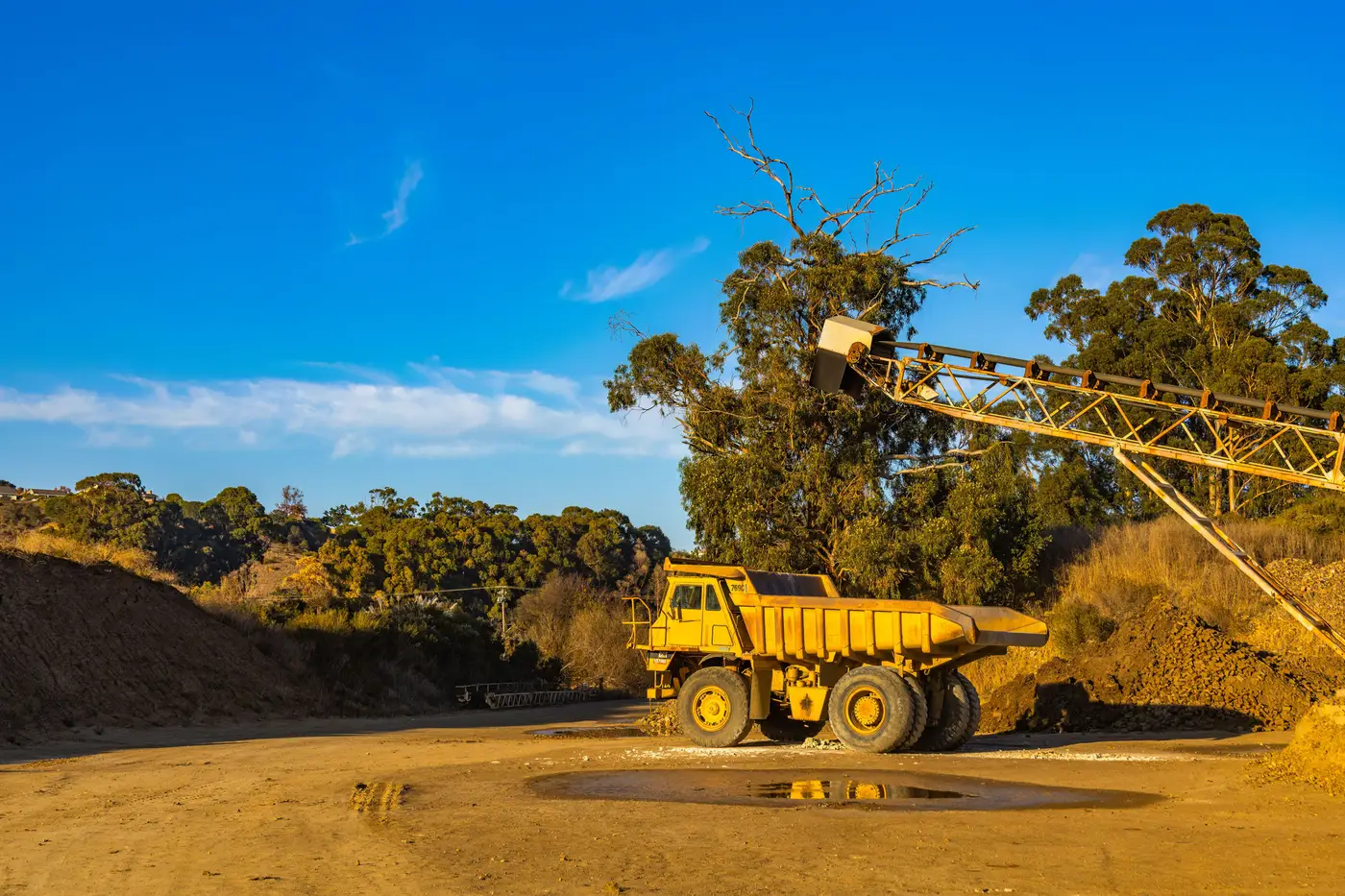
A single frame of overhead imagery will show you a truck that isn't moving. What it won't tell you, on its own, is whether that truck is third in line at the crusher tip or parked at the workshop waiting on a tyre. Both read as "stopped." For anyone benchmarking haul fleet activity from outside the fence, that distinction is most of the game.
Operators with telematics don't have this problem. A GPS ping plus an engine-hours feed sorts idle from queued automatically. From imagery alone you're working with position, spacing, and how things change frame to frame. It's a different kind of read, but it's a workable one if you know what to look for.
What one frame tells you, and what it doesn't
A single VHR capture gives you a count and a set of positions. You can see how many trucks are on the pit road, where they're sitting, and roughly how they're oriented relative to the haul route. What a single frame can't give you is intent. A truck nose-to-tail behind three others near a loading face looks almost identical, pixel for pixel, to a truck pulled off to the side with its tray up and nobody near it, if the frame happens to catch it at an odd moment.
A stopped truck's position relative to the road and the loading point does most of the classification work before you even start counting. Trucks queuing for a shovel or a crusher stack up in a line that follows the road, spaced close, pointed the same direction, waiting their turn. Trucks that are idle for other reasons, a shift change, a mechanical hold, a blast delay, tend to sit off that line entirely. They're in the laydown area, near the workshop, parked at the ready line, or scattered at odd angles that don't match the haul geometry at all. Geometry first, counting second.
Why cadence matters more than any one image
The stronger signal comes from watching the same stretch of road across consecutive days rather than staring at one capture. A queue is, by definition, temporary. Trucks move through it within a shift. A truck sitting in roughly the same spot on Tuesday and still there Wednesday is down or pulled off the roster, a fleet-availability signal rather than a cycle-time one.
Daily cadence also helps separate a genuine queue backlog from a one-off traffic jam. If the line at the crusher tip is three trucks deep every day for a week, that's telling you something about crusher throughput or shovel match, worth flagging in a utilisation benchmark. If it's three deep on one capture and gone the next, it was probably just a bad moment to take the picture.
Road condition plays into this too. A rutted or washed-out section of haul road slows trucks down without stopping them outright, which stretches cycle times without necessarily producing a visible queue. That's part of why a read on road surface condition alongside the truck count matters: a fleet that looks "idle-heavy" on paper might actually just be grinding through a bad stretch of road at low speed.
None of this needs telematics access or a site visit. a daily read on truck counts plus road condition, from imagery alone is exactly the kind of outside-the-fence benchmark that makes idle-versus-queue calls possible without ever getting behind the boom gate.
If you're trying to pin down cycle-time and utilisation numbers for a haul network you don't operate, a daily imagery read of the trucks on it and the condition of the road they're running on is worth a look.